Filter and sort
(0)
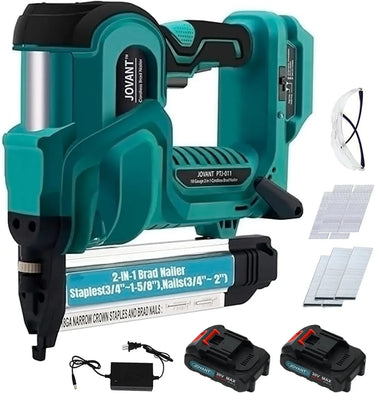
![JOVANT 18ga Cordless Nail Gun Product Details Display]()
![JOVANT 18ga Cordless Nail Gun Product Details Display]()
![JOVANT 18ga Cordless Nail Gun Product Details Display]()
![JOVANT 18ga Cordless Nail Gun Product Details Display]()
![JOVANT 18ga Cordless Nail Gun Product Details Display]()
Quick view 
![JOVANT 18ga Cordless Nail Gun Product Details Display]()
![JOVANT 18ga Cordless Nail Gun Product Details Display]()
![JOVANT 18ga Cordless Nail Gun Product Details Display]()
![JOVANT 18ga Cordless Nail Gun Product Details Display]()
![JOVANT 18ga Cordless Nail Gun Product Details Display]()
Quick view 
![JOVANT 18ga Cordless Nail Gun Product Details Display]()
![JOVANT 18ga Cordless Nail Gun Product Details Display]()
![JOVANT 18ga Cordless Nail Gun Product Details Display]()
![JOVANT 18ga Cordless Nail Gun Product Details Display]()
![JOVANT 18ga Cordless Nail Gun Product Details Display]()
Quick view 
![JOVANT 20V Max cordless drill brad nailer combo kit working scenes for furniture production, wood flooring, steel drilling and cement drilling]()
![JOVANT 20V Max brushless cordless drill parts labeled diagram, 1/2 inch chuck, 2 speed gear, torque adjustment ring and LED work light]()
![JOVANT 20V Max 2-in-1 cordless brad nailer and staple gun parts labeled diagram, soft grip handle and adjustable depth knob]()
![JOVANT 20V Max brushless cordless drill with 2 speed ranges 450-1800RPM, 3 work modes, and 2-in-1 brad nailer staple gun loading instructions]()
Quick view 20V Max* Brushless 1.25inch Brad Nailer and 1/2inch Hammer Drill Combo Kit $109.89 USD /Low Stock (10)Sold out 
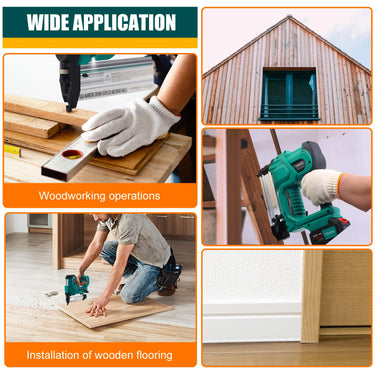
![WIDE APPLICATION Woodworking operations Installation of wooden flooring]()
![JOVANT 18ga Cordless Nail Gun Product Details Display]()
![JOVANT 18ga Cordless Nail Gun Product Details Display]()
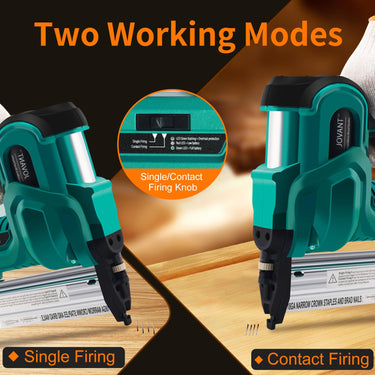
![Two Working Modes use the SinglelContactFiring Knob to adjust modes Single Firing Contact Firing]()
Quick view Save 5% 
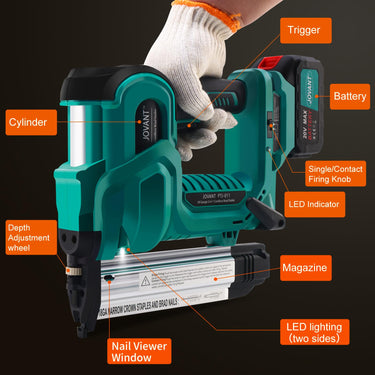
![Trigger Battery Cylinder Single/ContactFiring Knob JOVANT PT-011 3Cuge2nlCotieat sadioNsle LED Indicator Depth Adjustmentwheel Magazine LED lighting(two sides) Nail Viewer Window]()
![WIDE APPLICATION Woodworking operations Installation of wooden flooring]()
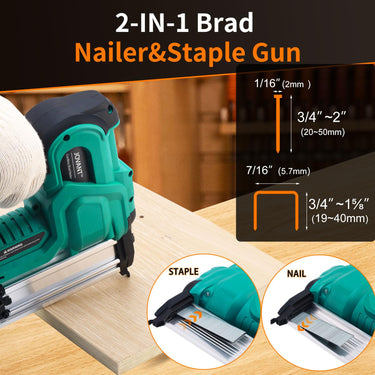
![2-IN-1 BradNailer&Staple Gun 1/16" (2mm ) 3/4"~2"(20~50mm) 7/16”(5.7mm) 3/4"~15%"(19~40mm)]()
![Two Working Modes use the SinglelContactFiring Knob to adjust modes Single Firing Contact Firing]()
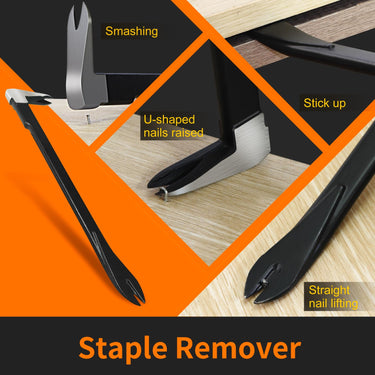
![Staple Remover operation guide: Smashing/Stick up/U-shaped nails raised/Straight nail lifting]()
Quick view 20V MAX* Brushless Cordless 2 inch Brad Nailer Kit w/1*4AH Battery (One Battery)$146.99 USD$139.99 USD /In stock (21)
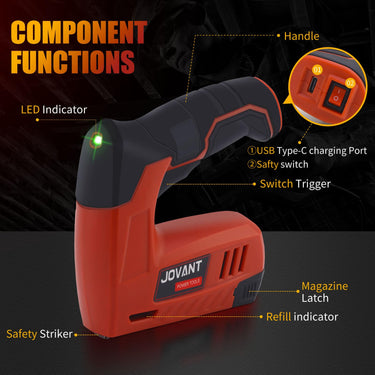
![COMPONENT FUNCTIONS: Handle LED Indicator USB Type-C charging Port Safty switch Switch Trigger MagazineLatch Refill indicator Safety Striker·]()
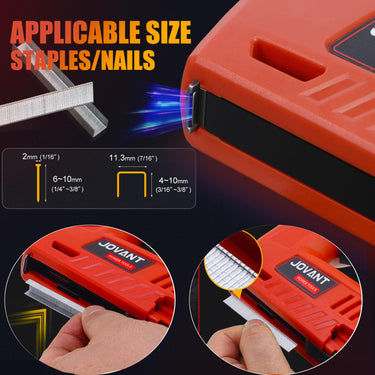
![APPLICABLE SIZESTAPLES/NAILS 2mm(1/16") 6~10mm(1/4"~3/8") 11.3mm(7/16") 4~10mm(3/16" ~3/8")]()
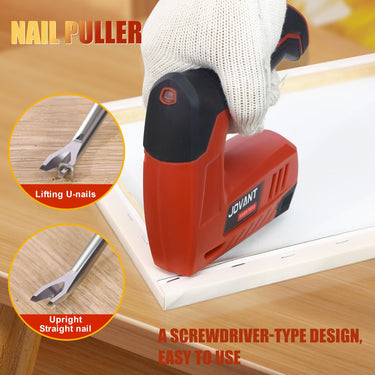
![NAIL PULLER: A SCREWDRIVER-TYPE DESIGN,EASY TO USE Lifting U-nails Upright Straight nail]()
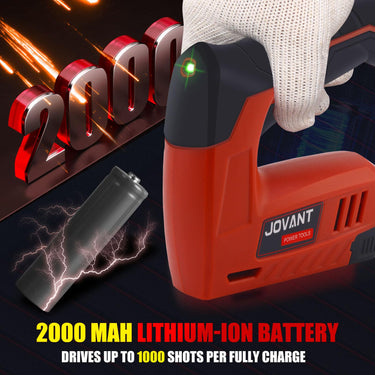
![2000 Mah Lithium-ion Battery drives up to 1000 shots per full charge]()
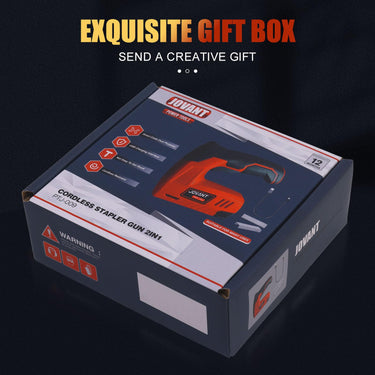
![Exquisite Gift Box]()
Quick view
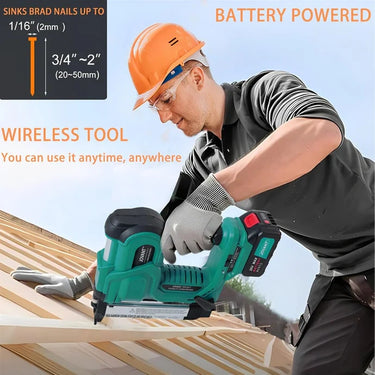
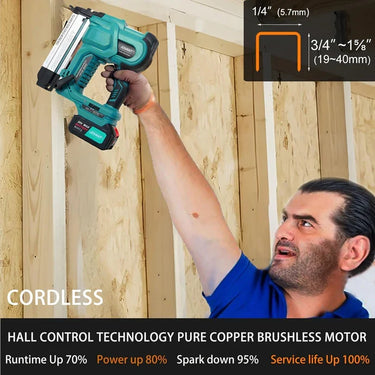
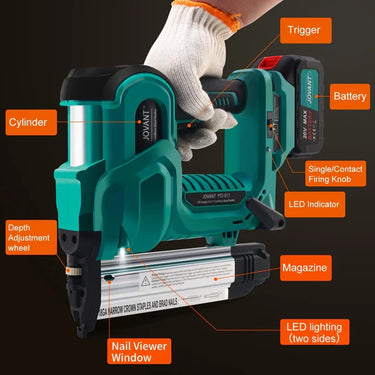






1-7 of 7 products
Compare products (0/5)