Can You Use a Leaf Blower for Snow? Yes, Here’s How!
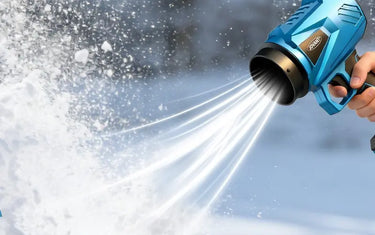
Do you usually store your leaf blower after cleaning in autumn? Have you ever thought that a leaf blower is also a great snow removal tool? It also could help you clear fresh snow faster and easier without twisting your back.
While it cannot replace professional snowblowers for heavy, wet, or deep snow, using a leaf blower for dry, powdery snow is a practical, time-saving hack for homeowners.
It turns a cold, tiring chore into a quick and simple task, letting you get back indoors faster. In this guide, we cover exactly when a leaf blower works for snow, which models perform best, step-by-step techniques, safety rules, and how to protect your machine during winter use.
1. When Your Leaf Blower Works Best for Snow
A leaf blower is not designed for all snow conditions. Understanding its limits will save you frustration and prevent wasted effort. Using it on the wrong type of snow will only leave you tired and your driveway still covered.
The ideal snow for a leaf blower is dry, light, and powdery—similar to fresh ski-resort snow. This type of snow moves easily with high-velocity airflow and does not clump or stick to surfaces.
① Snow is "dry" and fresh:
It works best within two to three hours of snowfall, before foot traffic or vehicle tires compact the snow into hard, icy layers.
Once snow is packed down, even powerful gas leaf blowers struggle to lift it, and you’ll end up going back to the shovel anyway. Timing is one of the most important parts of successful snow blowing.
② Depth stays under 2 inches:
For the best results, snow depth should be 2 inches or less. Deeper snow will block airflow and make the leaf blower ineffective.
Smooth, hard surfaces like concrete driveways, brick patios, wooden decks, car exteriors, and outdoor stairs are perfect. Leaf blowers excel in tight spaces where shovels are awkward, such as stairwells, corners, patio furniture, and around flower beds.
③ Surfaces are smooth:
avoid using a leaf blower on gravel or dirt yards, as the strong wind will blow stones, mud, and debris along with the snow.
This can damage plants, scratch cars, or create a bigger mess to clean up later. Stick to hard, smooth surfaces for the best results.
💡Pro Tip: Test a small patch first. If snow sprays like confetti, you’re golden. If it just wobbles? Grab the shovel.
2. Choosing the Right Leaf Blower for Snow Removal
Not all leaf blowers perform equally in cold, snowy conditions. Each type has advantages and drawbacks for winter use. Picking the right one for your yard size and snow type will make the job much easier.
① Corded Electric Leaf Blowers:
Corded electric models work well for small, flat areas near a power outlet. They provide consistent power without battery drain, so you don’t have to worry about running out of juice mid-job.
However, the power cord can freeze, become stiff, and create a tripping hazard. It can also get wet and increase electrical risk. Keep the cord elevated and dry to avoid ice buildup, and never let it sit in melting snow!
② Battery-Powered Leaf Blowers(My Top Pick):
Cordless battery leaf blowers are the top choice for snow removal. They offer full mobility and reach every corner of your yard without cord limitations, making them ideal for medium to large yards.
Keep in mind that cold weather drastically reduces battery life—most 20V batteries lose 30%–50% of their runtime in freezing temperatures.
Always keep spare batteries warm inside your coat or house and rotate them during use. A cold battery will die much faster, but a warm, fully charged battery will keep your leaf blower running strong through small to medium snow cleanup jobs!
③ Gas-Powered Leaf Blowers:
Gas Leaf blowers deliver the highest CFM and wind speed, making them effective for slightly thicker dry snow and larger properties. Choose models with 500+ CFM for better performance. They handle light, dry snow with ease and work well for long jobs without stopping.
However, never operate a gas leaf blower in enclosed spaces like garages, as carbon monoxide poisoning is a silent and deadly risk. They are also louder and heavier, which can cause more fatigue during longer use.
3. Step-by-Step Guide to Blowing Snow Efficiently
① Time Your Clearing:
Clear snow as early as possible after it falls. Fresh, unpacked snow is far easier to move than compacted snow. Waiting too long lets snow melt and refreeze into ice, which is nearly impossible to remove with a leaf blower.
② Adjust the Nozzle Angle:
Tilt the nozzle downward at a 30-degree angle. Blowing straight out only scatters snow everywhere; angling down pushes snow forward efficiently in a straight line. This helps you create clean, clear paths without snow blowing back onto your cleaned areas.
③ Short Bursts > Constant Blast:
Quick, intermittent blasts create stronger gusts that lift snow more effectively. Continuous airflow only glides over the top without moving it fully. Short bursts also save battery or fuel, making your tool last longer.
④ Use Safe Movement Patterns:
Walk sideways across sloped areas to prevent slipping on hidden ice. Overlap each pass by 50% to ensure full coverage and no leftover patches of snow. Move slowly and steadily to maintain balance
⑤ Work With the Wind:
Always blow snow downwind to avoid snow blowing back onto cleaned areas. Fighting a headwind will make the job take twice as long and leave you covered in blowing snow
4. Safety Tips for Snow Blowing!
① EYES:
Wear safety goggles to protect your eyes from flying pebbles, dirt, and ice crystals that get caught in the snow.
② EARS:
Use ear protection because gas and high-powered electric leaf blowers can reach over 100 dB, which can cause permanent hearing damage over time.
③ FEET:
Wear anti-slip shoe grips or crampons to avoid falling on hidden ice under the snow.
④ CORDS:
Keep cords away from snow and ice to prevent electrical hazards, and never touch a wet cord with bare hands.
5. How to Protect Your Leaf Blower in Winter
① Keep Vents Clear:
Clear snow from air intake vents every 10 minutes to prevent motor overheating or damage. Snow buildup can block airflow and burn out the engine quickly.
② Dry Before Storing:
After use, wipe the machine dry with a cloth and run it briefly indoors to evaporate moisture inside the tube and motor.
③ Battery Care:
Store batteries indoors at room temperature to avoid permanent capacity loss from cold.
④ Gas models:
drain excess fuel if you won’t use it for an extended period to prevent carburetor issues.
💡Pro Tip: Proper winter care extends the life of your leaf blower so it works well for leaves in fall and snow in winter.
6. Final Conclusion
It’s NOT for:
🚫 Wet snow ("heart attack snow")
🚫 Ice layers
🚫 Drifts over 3 inches
🚫 Gravel/dirt areas (you’ll blast debris everywhere)
Final Word:
A leaf blower is an excellent tool for light, dry, powdery snow up to 2 inches deep on hard, smooth surfaces. It saves time, reduces physical effort, and works great for decks, cars, stairs, small driveways, and tight corners that are hard to reach with a shovel.
A JOVANT leaf blower provides reliable power and consistent performance for winter snow cleanup, making quick work of light snowfall. However, for wet, heavy snow, solid ice, or drifts over 3 inches, a snow shovel or snowblower remains necessary.
With the right technique, proper safety gear, and simple maintenance steps, your leaf blower can serve you year-round, from fall leaf removal to winter snow clearing, making it one of the most versatile tools for your home.