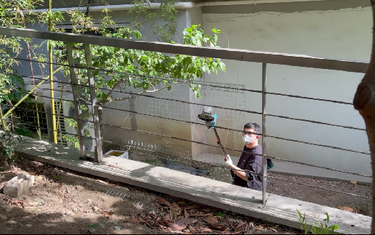
A cordless pole angle grinder is one of the most versatile and practical power tools for DIY lovers, maintenance teams, and metal workers.
It combines the convenience of cordless battery power, the extended reach of a long pole, and strong grinding performance.
This makes it perfect for high work, narrow spaces, outdoor projects, and areas without power access.
However, many users make simple but critical mistakes.
These mistakes lead to overheating, crooked cuts, short disc life, poor surface quality, and even safety risks.
This step-by-step guide shares easy methods for DIYers and professionals to operate a cordless pole angle grinder safely and efficiently.
In this guide, we will explain 3 professional tips to help you use your cordless pole angle grinder correctly.
You will improve work efficiency, achieve better results, and stay safe during every operation.
1. Cordless Pole Angle Grinder Cross Sanding: Avoid Overheating & Burn Marks
One of the most common problems when sanding with a cordless pole angle grinder is overheating.

Many users keep the tool in one spot for too long.
This causes metal to discolor, warp, or burn.
This habit also damages sanding discs quickly and reduces their service life.
The best solution is the cross sanding method, widely used by professionals for smooth, even finishes.
To use cross sanding properly:
- Hold the cordless pole angle grinder at a 15–30° angle to the workpiece
- Move the tool horizontally first, then vertically in a crisscross pattern
- Keep your movement steady and consistent without pressing too hard
- Overlap each pass slightly to ensure full coverage and uniform sanding
This method distributes heat and friction evenly across the surface, eliminating hot spots.
You will get a clean, smooth finish without burn marks or deep scratches.
It works for steel, iron, aluminum, weld seams, and various metal surface preparation tasks.
2. How to Get Straight, Clean Cuts Consistently with a Cordless Pole Angle Grinder
Cutting is one of the main functions of a cordless pole angle grinder.
However, many users struggle with crooked, uneven cuts with sharp burrs.
The good news is that with the right steps, you can achieve professional-level cuts every time.

Follow these steps for perfect cuts:
- Mark accurately: Use a laser pointer or pencil to mark a clear cutting line
- Secure the workpiece: Use clamps to hold it tightly and prevent movement
- Maintain 90° angle: Keep the cutting disc perfectly perpendicular to the material
- Steady feeding: Move forward slowly and evenly; let the disc do the work
- Deburr gently: Lightly grind the edge after cutting for a clean finish
This method reduces vibration, prevents disc slipping, and ensures straight, burr-free edges.
It is suitable for metal pipes, square tubes, steel plates, tiles, and other common materials.
3. Pre-Treat Rusty Metal Before Cutting for Safety & Precision
Cutting rusty metal directly is a common mistake that causes multiple issues.
These include disc slipping, off-track cutting, rapid wear, heavy sparks, and rough surfaces.
Rust and oxide create an unstable surface that makes control difficult.

The correct way is to pre-treat the metal before cutting.
How to pre-treat rusty metal:
- Use a sanding disc or wire wheel on your cordless pole angle grinder
- Remove rust and oxide along the cutting line (about 2-3 inches wide)
- Expose clean, smooth metal for stable cutting
- Wipe off dust and proceed with standard cutting
Pre-treatment makes cutting smoother, safer, and more precise.
It also extends the life of your cutting discs and reduces spark and dust pollution.
This step is highly recommended for old metal, rusty pipes, steel structures, and outdoor repair work.
Conclusion
A cordless pole angle grinder is a powerful, convenient tool for cutting, sanding, grinding, and rust removal.
By mastering the cross sanding technique, using the proper straight-cut method, and pre-treating rusty metal, you can greatly improve work quality.
You will also extend the life of your discs and tool, and work more safely.
These three tips are easy to learn and apply, making them suitable for both beginners and experienced users.
Whether you are doing DIY projects at home, repairing equipment, or working on metal construction, a cordless pole angle grinder will boost your efficiency.
It is the ideal long reach power tool for all your metal cutting, sanding and maintenance tasks.
With the right skills, you can achieve professional results on every job.
FAQ
Q1: What is a cordless pole angle grinder used for?
A: It is used for cutting, sanding, grinding, rust removal, and surface preparation on metal, tile, stone, and other hard materials.
Q2: How to avoid overheating when sanding metal?
A: Use cross sanding, avoid staying in one spot too long, keep a proper angle, and do not press too hard.
Q3: How to get straight cuts with a cordless pole angle grinder?
A: Mark the line clearly, fix the workpiece, keep a 90° angle, and move forward slowly and steadily.
Q4: How to extend the life of grinding discs?
A: Use correct operation, avoid overheating, pre-treat rusty metal, and do not force the tool.
Q5: Is a cordless pole angle grinder suitable for outdoor use?
A: Yes, its cordless battery design and long pole make it ideal for outdoor, high, and hard-to-reach jobs.
Q6: What are the benefits of a long reach cordless pole angle grinder?
A: It offers extended reach for high and tight spaces, cordless freedom for outdoor jobs, and delivers smooth cutting, sanding and rust removal on most metal surfaces.
Browse our full collection of cordless pole angle grinder models for home DIY and industrial repair.