A well-adjusted chainsaw chain is essential for safe operation, smooth cutting, and long tool life. Chainsaw chain adjustment is a basic yet critical skill every user should master, as improper tension leads to safety risks, quick wear, and poor performance.
This professional guide walks you through the official 5-step method for precise chainsaw chain adjustment to achieve ideal tension every time you use your chainsaw.
Why Chainsaw Chain Adjustment Matters
Regular chainsaw chain adjustment protects both you and your tool from unnecessary damage. A loose chain can slip off the bar, while an overly tight chain causes overheating and breaks easily.
Correct chainsaw chain adjustment reduces friction, stabilizes cutting, and extends the life of your chain, bar, and engine.
Without proper chainsaw chain adjustment, you will experience reduced efficiency, shorter battery runtime, and higher risks of accidents during use.
Taking a few minutes to adjust your chain before each use ensures safe and reliable performance for all cutting tasks.
Step 1: Safety Preparation for Chainsaw Chain Adjustment
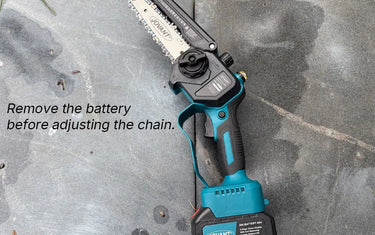
Safe chainsaw chain adjustment always starts with full power disconnection to prevent accidental startup.
- Remove the battery pack completely from your chainsaw.
- Put on protective gloves to avoid sharp edges on the chain.
- Clean the guide bar groove and chain to remove wood chips, dirt, and debris.
A clean and powerless tool ensures you can perform chainsaw chain adjustment safely and accurately.
Step 2: Check Current Chain Tension Before Adjustment
Before making any changes, diagnose the existing tension of your chainsaw chain.
- Wear gloves and gently lift the middle section of the chain.
- The drive teeth should lift slightly but remain engaged in the bar groove.
- Note if the chain is too loose, too tight, or uneven around the bar.
This quick check helps you understand how much chainsaw chain adjustment is needed to reach the ideal state.
 Step 3: Loosen Locking Knobs for Adjustment
Prepare your tool for chainsaw chain adjustment by releasing the locking components.
- Locate the top locking knob on the side cover.
- Turn the knob counterclockwise to loosen the side cover.
- Keep the knobs loose enough to allow smooth movement of the bar and chain.
Do not fully remove the knobs—just loosen them to enable flexible chainsaw chain adjustment.
Step 4: Professional Chainsaw Chain Precision Adjustment
This is the core step for reliable chainsaw chain adjustment.
- Locate the tension adjustment knob at the bottom of the tool.
- Turn the knob slowly to tighten or loosen the chain.
- Stop when the chain fits snugly against the bar but can still move freely by hand.
- Avoid over-tightening, as it causes overheating and premature wear.
The goal is to achieve balanced tension that supports smooth and safe cutting.
 Step 5: Post-Adjustment Test & Inspection
Finish chainsaw chain adjustment with a full operational check to confirm success.
- Reinstall the battery pack securely.
- Run the chainsaw at medium speed for about 1 minute.
- Watch for smooth, steady chain rotation without wobbling or sticking.
- Test a small piece of wood to verify clean and effortless cutting.
If the chain performs well, your chainsaw chain adjustment is complete. If not, repeat the adjustment steps until ideal tension is achieved.
Key Signs You Need Immediate Chainsaw Chain Adjustment
Watch for these clear signals that your chain requires urgent chainsaw chain adjustment:
- Sawdust becomes fine powder instead of clean wood chips
- Chain wobbles, sags, or slips on the guide bar
- You need to push hard to make the chain cut through wood
- Battery life drops unusually fast during operation
- Unusual noise or friction occurs while cutting
Ignoring these signs increases risks and shortens your tool’s service life.

Ideal Chainsaw Chain Tension Standard
| Condition | Standard | Purpose |
|---|---|---|
| Chain fit | Snug against the bar | Prevent slipping |
| Lift range | 1–2 mm easily | Allow smooth movement |
| Drive teeth gap | Credit card thickness | Reduce friction |
| Rotation | Smooth, no tight spots | Ensure stable cutting |
Following this standard ensures your chainsaw chain adjustment meets professional requirements.
FAQ
Q: How often should I do chainsaw chain adjustment?
A: Perform chainsaw chain adjustment before each use and after long cutting sessions, as chains stretch with use.
Q: What happens if the chain is too tight after adjustment?
A: An over-tight chain causes overheating, bar wear, and increased power consumption. It may also break suddenly during use.
Q: Can I adjust the chain without removing the battery?
A: No. Always remove the battery before chainsaw chain adjustment to avoid accidental startup and injury.
Q: How do I know if my chainsaw chain adjustment is correct?
A: The chain should fit tight to the bar, lift 1–2 mm easily, and spin smoothly without resistance.
Conclusion
Chainsaw chain adjustment is a simple yet vital task that ensures safe, efficient, and long-lasting chainsaw performance.
Using this professional 5-step method, you can achieve perfect tension every time and avoid common problems like slipping, overheating, and premature wear.
Make chainsaw chain adjustment part of your regular pre-use routine to protect your investment and enjoy reliable cutting for years.